Environmental sustainability in packaging starts before recycling

Environmental sustainability in packaging is not a simple choice between paper, plastic, glass or metal. It means reducing impact across the full packaging life cycle while still protecting the product, moving it efficiently and giving users clear disposal information. For packaging teams, the strongest work usually starts before recycling: remove unnecessary material, design for reuse or efficient recovery where those systems exist, increase verified recycled content when performance allows, and use only claims that can be substantiated. Public sources including the U.S. Environmental Protection Agency, the Federal Trade Commission, ISO and the European Commission point in the same direction: sustainable packaging must be measurable, context-specific and honest.
Why packaging matters to environmental sustainability
Packaging is visible to consumers, but its environmental importance goes beyond appearance. It affects raw material demand, logistics weight and volume, product damage rates, waste collection, recycling economics and the credibility of brand claims. A lightweight pouch, a corrugated shipper, a glass jar and a refillable container can each be the lower-impact option in a different application. The useful question is not “Which material is always sustainable?” but “Which packaging system performs the required job with the lowest verified impact in this market?”
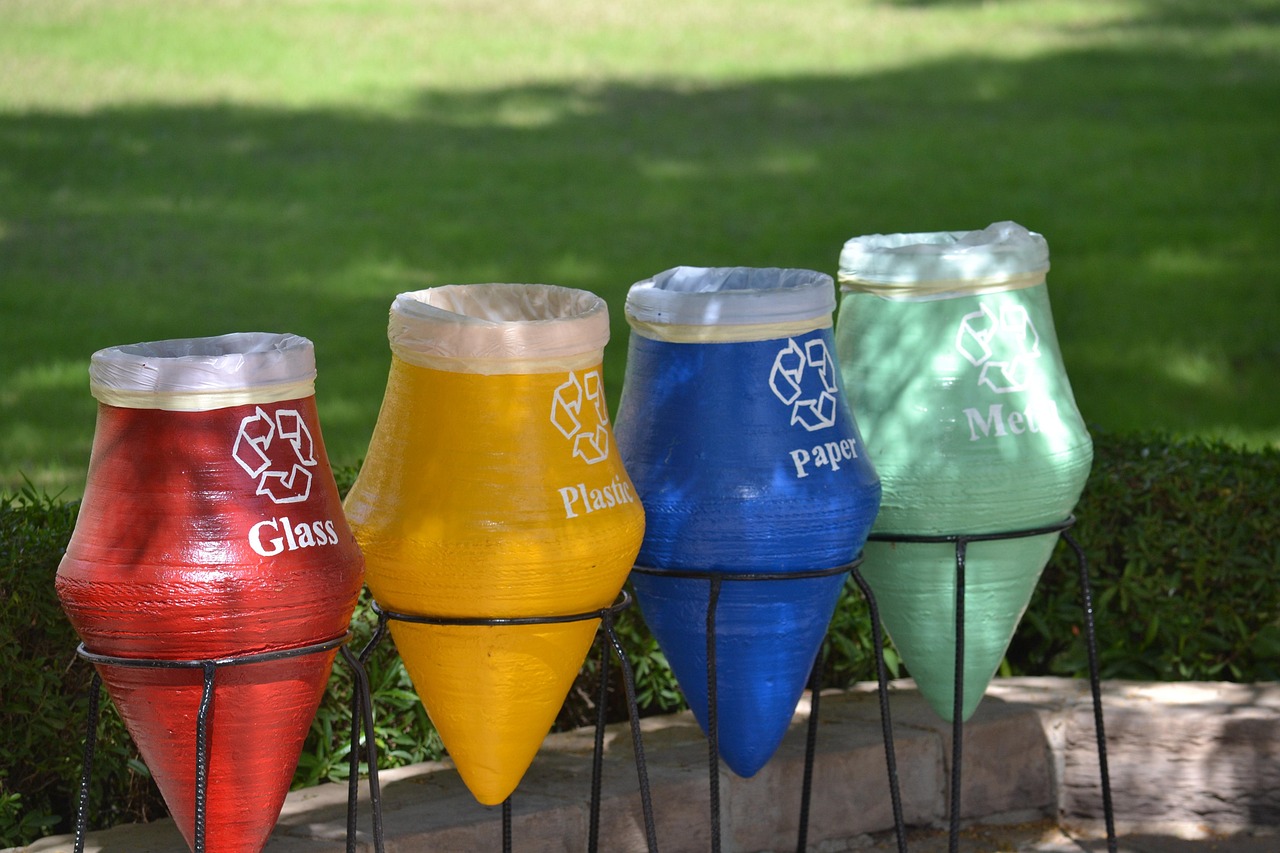
The scale of the issue is significant. In the U.S. EPA’s national municipal solid waste dataset for 2018, containers and packaging accounted for 82.2 million tons of generation, or 28.1% of total municipal solid waste. The same dataset reported a 53.9% recycling rate for generated containers and packaging, while 30.5 million tons were landfilled. These figures are not a current-year estimate, but they remain a useful benchmark because they show that packaging is a major material flow even in a mature waste management system.
Material type also matters because recycling performance varies widely. EPA’s 2018 data reported a 96.5% recycling rate for corrugated boxes, 80.9% for paper and paperboard packaging overall, 31.3% for glass containers and packaging, and 50.4% for aluminum beverage cans. This does not prove that one material is always better than another. It shows that environmental sustainability depends on design, contamination risk, collection access, end-market demand and the product being packed.
| Packaging decision | Environmental sustainability question | Why it matters |
|---|---|---|
| Material selection | Can the material protect the product with lower life-cycle impact? | A weak package that causes product loss can create more impact than a slightly heavier package. |
| Format and size | Can void space, layers or excess components be removed? | Source reduction reduces material use before waste is created. |
| Recovery route | Is the package actually collected, sorted and recycled or composted in the target market? | Technical recyclability is not the same as practical recovery. |
| Claim language | Can every environmental statement be supported with evidence? | Unqualified claims can mislead buyers and create regulatory risk. |
The practical hierarchy starts with reduction and reuse
The EPA’s non-hazardous materials and waste management hierarchy places source reduction and reuse above recycling and composting. That order matters in packaging because it keeps recycling from becoming the first or only answer. If a component can be eliminated without increasing product damage, removing it is often more effective than making the same unnecessary component recyclable.
Source reduction can include right-sizing e-commerce cartons, removing redundant inserts, reducing film thickness where performance allows, replacing mixed-material decorations with compatible printing, shipping concentrated products, or moving from single-use distribution packaging to controlled reuse systems. These changes are not always highly visible to consumers, but they can reduce material use, freight volume and disposal burden.
Reuse can be valuable, but it is not automatic. A reusable pack must survive enough trips to justify its production impact, fit an efficient reverse logistics system, be cleaned or inspected safely when required, and be returned at a high enough rate. Reuse is most credible in closed or semi-closed systems such as industrial totes, pallets, beverage crates, refill stations, business-to-business loops and some local delivery models. In fragmented consumer markets, reuse may also require deposits, convenient return points and behavior change.
Recycling and composting remain important, especially when elimination or reuse is not practical. However, design for recycling should consider the whole package, not only the main material. Labels, adhesives, coatings, closures, pigments and barrier layers can determine whether a package is sorted correctly and accepted by recyclers. Compostable packaging also depends on the right end-of-life environment; a compostable claim is weak if the material is unlikely to reach an appropriate composting facility.
Regulation and standards are raising the proof requirement
Environmental sustainability is moving from voluntary messaging toward measurable compliance. In the European Union, Regulation (EU) 2025/40 on packaging and packaging waste began to apply on 12 August 2026. The regulation is designed to reduce packaging waste, improve recyclability, increase recycled content in plastic packaging over time and harmonize certain labelling and design requirements across the EU market. For global packaging businesses, this matters even outside Europe because multinational brands often align specifications across regions.
The EU direction is clear: packaging must be designed with end-of-life performance in mind, not merely described as sustainable after the fact. The European Commission has stated that all packaging must be recyclable by 2030, while plastic packaging will face increasing recycled-content targets for 2030 and 2040. The regulation also addresses avoidable packaging, empty space and clearer sorting information. These measures show that environmental sustainability is becoming a design specification, a documentation task and a market-access issue.
In the United States, the FTC Green Guides remain a key reference for environmental marketing claims. The Guides state that recyclable claims should be qualified when appropriate recycling facilities are not available to at least 60% of consumers or communities where a product is sold. They also emphasize that compostable claims require competent and reliable scientific evidence, and recycled-content claims should accurately describe material recovered or diverted from the waste stream. The practical lesson is straightforward: a packaging claim should describe what is true, where it is true and under what conditions.
International standards add another layer of discipline. ISO 14021:2026 addresses self-declared environmental claims and emphasizes that such claims should be accurate, relevant, verifiable and not misleading. For packaging teams, this is especially relevant to terms such as recyclable, recycled content, reusable, compostable, renewable material and reduced material use. A claim that sounds attractive but lacks documentation can undermine trust, even when the package itself is a genuine improvement.
How to compare packaging options without oversimplifying
Many packaging debates become too narrow because they focus on a single attribute. “Plastic-free,” “paper-based,” “lightweight,” “mono-material” and “compostable” can all be useful ideas, but none of them is a complete sustainability assessment. A better comparison looks at the packaging system, including product protection, material intensity, transport efficiency, recovery infrastructure and claim substantiation.
Product protection comes first
The first environmental function of packaging is preventing product loss. Food spoilage, broken goods, returned shipments and contamination can carry high environmental and financial costs. A package that uses less material but causes more damage may shift impact rather than reduce it. This is why environmental sustainability should be tested against real distribution conditions, shelf-life requirements and user behavior.
Material efficiency is more than lightweighting
Lightweighting can reduce material use and freight emissions, but it must not create fragile packaging, higher contamination risk or lower recyclability. In some cases, a slightly heavier mono-material package may be easier to recycle than a lighter multi-layer structure. In other cases, a flexible format may reduce transport impact and product waste even if recycling access is limited. The best decision depends on the product, market and available recovery route. See also: BOX DESIGN.
End-of-life design must match local systems
A package can be technically recyclable in a laboratory but rarely recycled in practice. Collection access, sorting equipment, bale specifications, contamination limits and buyer demand all affect the outcome. Environmental sustainability improves when design teams ask recyclers, composters and waste authorities what actually works in the target market before finalizing materials and labels.
Claims need boundaries
A precise claim is usually stronger than a broad one. “Made with 30% post-consumer recycled content” is clearer than “eco-friendly.” “Recycle if clean and dry where store drop-off is available” is more useful than an unqualified recycling logo on a flexible film that most curbside programs do not accept. The claim should follow the evidence, not the marketing calendar.
Common claim risks in sustainable packaging
Greenwashing risk often comes from vague language rather than deliberate deception. Terms such as “green,” “earth-safe,” “eco,” “natural” and “sustainable” can imply broad environmental benefits that are difficult to prove. Packaging teams should treat these words with caution unless they are paired with specific evidence and a clear explanation.
- Recyclable: State the relevant package component and qualify the claim if access is limited in the sales market.
- Recycled content: Identify the percentage and, where relevant, whether it is post-consumer or pre-consumer material.
- Compostable: Specify whether the package is intended for home composting or industrial composting, and avoid implying universal access.
- Biodegradable: Avoid broad claims when the package is likely to be landfilled, incinerated or recycled, because those environments may not support timely breakdown.
- Plastic-free: Use carefully. Removing plastic does not automatically reduce total impact if the substitute is heavier, less protective or harder to recover.
- Source reduced: Provide the comparison point, such as weight reduction versus the previous design.
The most reliable claims are narrow, measurable and documented. They can be supported by supplier data, recognized testing methods, chain-of-custody records, life-cycle assessment where appropriate, and confirmation from recovery systems. Packaging professionals can find more sustainability-focused industry context in the Sustainability section.
A practical checklist for lower-impact packaging decisions
Environmental sustainability is easier to manage when it is built into the packaging brief instead of reviewed after design approval. The following checklist can help teams compare options without relying on slogans.
- Define the job of the package. List protection, shelf life, barrier, tamper evidence, display, transport, user safety and regulatory requirements.
- Remove avoidable packaging first. Challenge empty space, redundant layers, oversized labels, unnecessary windows, excessive inks and single-use accessories.
- Right-size the format. Optimize dimensions for pallets, parcels, shelves and consumer use so that material and transport volume are not wasted.
- Choose materials for the target market. Match material choices to local collection and recycling or composting infrastructure, not generic global assumptions.
- Design the whole pack for recovery. Check closures, adhesives, coatings, labels, inks and barrier layers, not only the main substrate.
- Use recycled content where performance allows. Verify supply, quality, food-contact suitability where relevant and documentation.
- Evaluate reuse realistically. Model return rates, washing or inspection needs, breakage, reverse logistics and the number of trips required.
- Substantiate claims before launch. Keep records that support every environmental statement on the pack, website and sales material.
- Review after market feedback. Track damage, returns, consumer disposal confusion, recycling acceptance and regulatory changes.
This approach does not produce one universal answer, but it helps reduce the risk of solving one problem while creating another. It also aligns packaging decisions with how regulators, standards bodies and waste systems increasingly define credible environmental performance.
Frequently asked questions
Is recyclable packaging always the most sustainable option?
No. Recyclability is important, but it is only one part of environmental sustainability. A recyclable package that causes product damage, uses excessive material or is not collected in the target market may perform worse than a different design. The best option balances product protection, material efficiency, recovery access and verified impact.
Does paper packaging automatically have a lower impact than plastic?
Not automatically. Paper may be renewable and widely recycled in some formats, especially corrugated packaging, but it can be heavier, require coatings for moisture or grease resistance, or fail in applications that need strong barriers. Plastic can be lightweight and protective but often faces recycling and leakage challenges. The comparison should be based on the actual format and use case.
What is the difference between recycled and recyclable?
Recycled content describes what a package is made from. Recyclable describes whether the package can be collected, sorted and processed into new material in the relevant market. A package can contain recycled content without being widely recyclable, and a package can be recyclable without containing recycled content.
How should a company make credible environmental packaging claims?
Use specific language, identify the package component, include percentages when making recycled-content claims, qualify claims when infrastructure is limited, and keep evidence on file. Broad statements such as “eco-friendly packaging” should be avoided unless they are backed by clear, verifiable and relevant information.
What is the first step toward more sustainable packaging?
The first step is source reduction: remove packaging that is not needed for protection, safety, logistics or communication. After that, teams can evaluate reuse, recyclable design, recycled content, compostability and claim substantiation based on the product and market.