Miter saw buying guide for choosing the right size, slide, bevel, and safety features
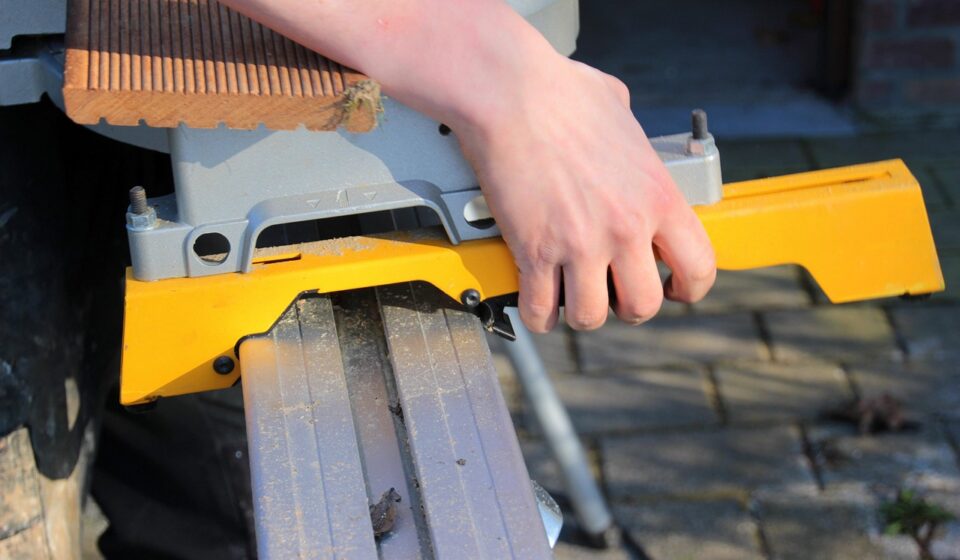
Start with the cuts you actually need to make
A useful miter saw buying guide starts with the work, not the largest blade on the shelf. For most DIY, trim, shelving, flooring, and light remodeling jobs, the right saw is the one that can crosscut your common board widths, make the bevels you use repeatedly, support the material safely, and hold its settings over time. A sliding dual-bevel saw is the most versatile layout, but it is not automatically the best value for every shop. If you mainly cut narrow dimensional lumber, a simpler compound saw may be easier to carry, tune, and store.
Before comparing models, list the materials you expect to cut: baseboard, crown molding, deck boards, framing lumber, hardwood blanks, laminate flooring, or aluminum trim. Then match those cuts to the saw’s actual capacity chart. If you want more practical equipment comparisons, the buying guides section is a useful place to continue reading.
Miter saws are built for controlled crosscuts and angled cuts. They are not replacements for table saws when you need long rip cuts, and they are not the safest choice for tiny offcuts that cannot be clamped or held firmly against the fence. Keeping that boundary clear helps you buy for the right job instead of expecting one tool to solve every cutting problem.
Understand the main miter saw types before comparing models
Much of the confusion comes from names that sound similar. The type of saw determines which angles it can cut and how wide a board it can handle. Use the terms below as a shopping filter before you focus on brands, accessories, or sale prices.
| Saw type | What it does | Good fit | Main limitation |
|---|---|---|---|
| Basic miter saw | Rotates left and right for angled crosscuts | Simple trim, picture frames, light crosscutting | No bevel cuts for tilted edges |
| Compound miter saw | Adds bevel tilt, usually to one side | Baseboard, casing, general home projects | More flipping of workpieces for opposite bevels |
| Dual-bevel compound saw | Tilts left and right | Crown molding, repeated trim work, cleaner workflow | Costs more than single-bevel models |
| Sliding compound saw | Moves the blade head forward and back | Wider boards, shelving, flooring, stair parts | Needs more room behind or a compact rail design |
| Cordless miter saw | Uses battery power instead of a cord | Jobsite punch lists and remote work areas | Runtime and battery platform matter |
If you are buying one saw for a mixed home workshop, a sliding compound model gives you the most flexibility. If the saw will be moved constantly, a lighter non-sliding option may be the better daily tool. If your work involves crown molding, symmetrical trim returns, or frequent compound cuts, dual bevel is more than a convenience because it reduces the need to flip long or finished pieces.
Choose blade size by capacity, not by ego
The most common blade sizes for miter saw buyers are 7-1/4 inch, 10 inch, and 12 inch. Larger blades can increase vertical and crosscut capacity, but they also tend to add weight, cost, and sometimes blade deflection. Smaller saws can be easier to carry, easier to store, and cheaper to fit with quality blades. The better question is not which size sounds stronger; it is whether the saw can cut your real materials at 90 degrees, 45 degrees, and common bevel settings.
A 10-inch sliding saw is often enough for many homeowners and finish carpentry tasks because the slide increases crosscut width without moving to a heavier 12-inch platform. A 12-inch saw becomes more persuasive if you routinely cut wider stock, tall baseboard standing against the fence, large crown molding nested in position, thick posts, or framing material that pushes the limits of a smaller saw. Compact 7-1/4 inch models make sense when portability is the priority and the work is mostly small trim, flooring, or punch-list cuts.
Do not assume blade diameter tells the whole story. Fence height, rail design, motor placement, bevel geometry, and guard clearance all affect usable capacity. Manufacturer charts usually list crosscut capacity, vertical baseboard capacity, and crown molding capacity separately. Read all three. A saw that looks capable on paper may still disappoint if it cannot hold your preferred trim orientation.
Features that matter more than marketing labels
Accurate detents and easy angle adjustment
The miter table should lock positively at common angles such as 0, 15, 22.5, 31.6, and 45 degrees. The bevel scale should be visible, repeatable, and easy to adjust without forcing your hand near awkward pinch points. If the saw has sloppy detents or a vague lock, every project takes longer because you will spend more time checking and correcting cuts.
A stable fence and useful material support
The fence keeps the workpiece square to the blade. Look for a flat, aligned fence with sliding or removable sections for bevel cuts. Tall fences help with baseboard and crown molding, but they must not interfere with the blade path. Long stock also needs outboard support. A good stand, extension wings, or a shop-built support table can improve safety and accuracy more than many premium features on the saw itself.
Shadow line or laser guidance
Cut-line systems are useful, but they do not replace measuring, marking, and test cuts. Shadow-line systems show the actual blade kerf by projecting the blade’s shadow, while lasers may need calibration and may indicate only one side of the cut. Either system is helpful when it is visible, aligned, and easy to trust. For precision joinery, make a scrap test cut before cutting finished material.
Dust collection that works with your space
Miter saws are messy because the blade throws dust in multiple directions, especially during bevel and sliding cuts. A small dust bag helps only modestly. If you cut indoors, in a garage, or near finished surfaces, check whether the saw has a practical dust port and enough room for a vacuum hose without blocking the slide. Health and safety guidance from occupational agencies treats wood dust as more than a housekeeping issue; it can irritate the eyes, skin, and respiratory system, and long-term exposure deserves serious control. That makes dust capture, ventilation, and respiratory protection part of the buying decision, not an afterthought.
Safety checks should influence what you buy
A miter saw is safer when the workpiece is supported, the guard moves freely, the blade stops predictably, and the operator can keep both hands away from the cut line. Buying a saw with poor visibility, awkward controls, weak clamping, or a sticky guard creates problems before the first project begins.
OSHA’s rules for portable circular saw guarding emphasize upper and lower guards, and require the lower guard to return automatically when the tool is withdrawn from the cut. While a miter saw has its own design, the buying lesson is similar: never treat a blade guard as decorative. Check that the guard opens smoothly through the full cut and returns without hesitation. If you are evaluating a used saw, missing or modified guards should be a hard stop.
CCOHS safety guidance for mitre saws also points to practical habits that connect directly to buying. Use the correct blade type, understand the manual before operating the machine, avoid defective stock with loose knots or foreign material, and keep the work firmly against the fence. A saw with a good clamp, reachable hold-down points, and clear instructions makes those habits easier to follow. See also: BOX DESIGN.
Product history matters too. In August 2022, the U.S. Consumer Product Safety Commission announced a recall involving certain DeWALT DWS779, DWS780, and DHS790 miter saws with date codes from 2019 04 through 2022 04 because the rear safety guard assembly could break or detach. The recall reported hundreds of guard-related incidents and several laceration injuries. That does not mean every used saw is unsafe, but it does mean buyers should check model numbers, date codes, and recall status before purchasing secondhand power tools.
How to match a miter saw to your project profile
For occasional DIY and small repairs
Choose a compact compound saw or a smaller sliding model if your work is mostly shelves, small trim, flooring cuts, and basic dimensional lumber. Prioritize easy storage, low weight, clear angle scales, and a blade upgrade. You probably do not need the largest saw unless you already know your material sizes demand it.
For trim, baseboard, and crown molding
Look closely at bevel range, fence height, crown stops, and repeatable detents. A dual-bevel saw saves time because you can make opposing bevel cuts without flipping long trim in awkward ways. Capacity for nested crown molding is important if you prefer cutting crown in position rather than laying it flat and calculating compound angles.
For decks, framing, and outdoor projects
Capacity and rugged support matter. A 12-inch sliding model or a high-capacity 10-inch slider may be appropriate if you frequently cut wider boards and thicker stock. Consider the full setup, including a stable stand and extension supports. If power access is unreliable, cordless may be useful, but only if you already own compatible high-capacity batteries or are prepared to invest in them.
For small shops and garages
Measure the front-to-back footprint with the rails fully extended. Traditional sliding saws may need significant rear clearance, while compact rail or glide-style designs can sit closer to a wall. Dust collection becomes especially important in small spaces because fine dust spreads quickly and settles on stored items.
A practical pre-purchase checklist
- List the widest and tallest materials you expect to cut in the next 12 months.
- Check crosscut, baseboard, and crown capacity in the manufacturer’s specifications.
- Decide whether single bevel is enough or dual bevel will save real time.
- Test the miter and bevel locks for repeatability and easy adjustment.
- Inspect the guard, brake, fence, clamp, and power cord before buying.
- Confirm that replacement blades are common, affordable, and suited to your materials.
- Plan for a stand, dust extraction, hearing protection, eye protection, and safe storage.
- For used tools, check recalls, missing parts, blade condition, and signs of impact or modification.
Budget should include more than the saw. A sharp finish blade, a stable stand, clamps, dust control, and personal protective equipment can change the quality and safety of your results. It is often better to buy a mid-range saw with proper support and a good blade than a larger saw that leaves no budget for the accessories needed to use it well.
Frequently asked questions
Is a 10-inch or 12-inch miter saw better for most buyers?
Neither size is automatically better. A 10-inch sliding miter saw is a practical fit for many home and trim projects because it balances capacity and portability. A 12-inch saw makes more sense for frequent wide boards, tall trim, larger crown molding, and thicker stock. Always compare the specific capacity chart, not only the blade diameter.
Do I need a sliding miter saw?
You need a sliding saw if your regular work includes boards wider than a non-sliding saw can crosscut. If you mainly cut narrow trim or small dimensional lumber, a non-sliding compound saw may be lighter, simpler, and accurate enough. The slide adds capacity but also adds weight, cost, and setup space.
Is dual bevel worth paying for?
Dual bevel is worth it when you make frequent trim, crown, or compound-angle cuts from both directions. It saves time and reduces the need to flip finished workpieces. For simple framing and occasional straight cuts, single bevel can be sufficient.
Can a miter saw cut metal?
Some miter saws can cut certain non-ferrous metals or metal profiles when fitted with the correct blade and used according to the manufacturer’s instructions. Do not assume a woodworking blade or standard setup is safe for metal. Check the saw manual, blade rating, work-holding method, and spark or chip control requirements first.
What should I check when buying a used miter saw?
Check the model number, date code, recall status, guard action, brake function, fence alignment, bevel lock, blade wobble, power cord, and missing accessories. Avoid saws with removed guards, cracked housings, bent fences, rough bearings, or unclear ownership history. A low used price is not a bargain if the tool cannot be made safe and accurate.