Buying a microwave in 2026 with the right size, power and features
The practical answer before you shop
If you are buying a microwave in 2026, start with three checks: where it will be installed, what dishes it must hold, and how it will be used most often. For many households, a 1.0 to 1.2 cubic foot countertop microwave with about 900 to 1,000 watts is enough for daily reheating and basic cooking. Larger families, meal-prep users and buyers who often reheat wide plates may need 1.3 cubic feet or more. Over-the-range and built-in models can solve space or design problems, but they add installation cost and make future replacement less flexible. The better purchase is not always the model with the longest feature list; it is the model that fits the space, provides enough usable interior room, has reliable controls, and arrives with intact packaging, accessories and safety documentation. For more purchase planning articles, see our BUYING GUIDES section.
Start with the installation type
The first decision is not wattage or brand. It is whether the microwave should sit on a counter, mount above a range, or fit into cabinetry. Each format changes the real cost, the replacement process and the risk of choosing the wrong size.
| Type | Best fit | Main advantage | Main limitation |
|---|---|---|---|
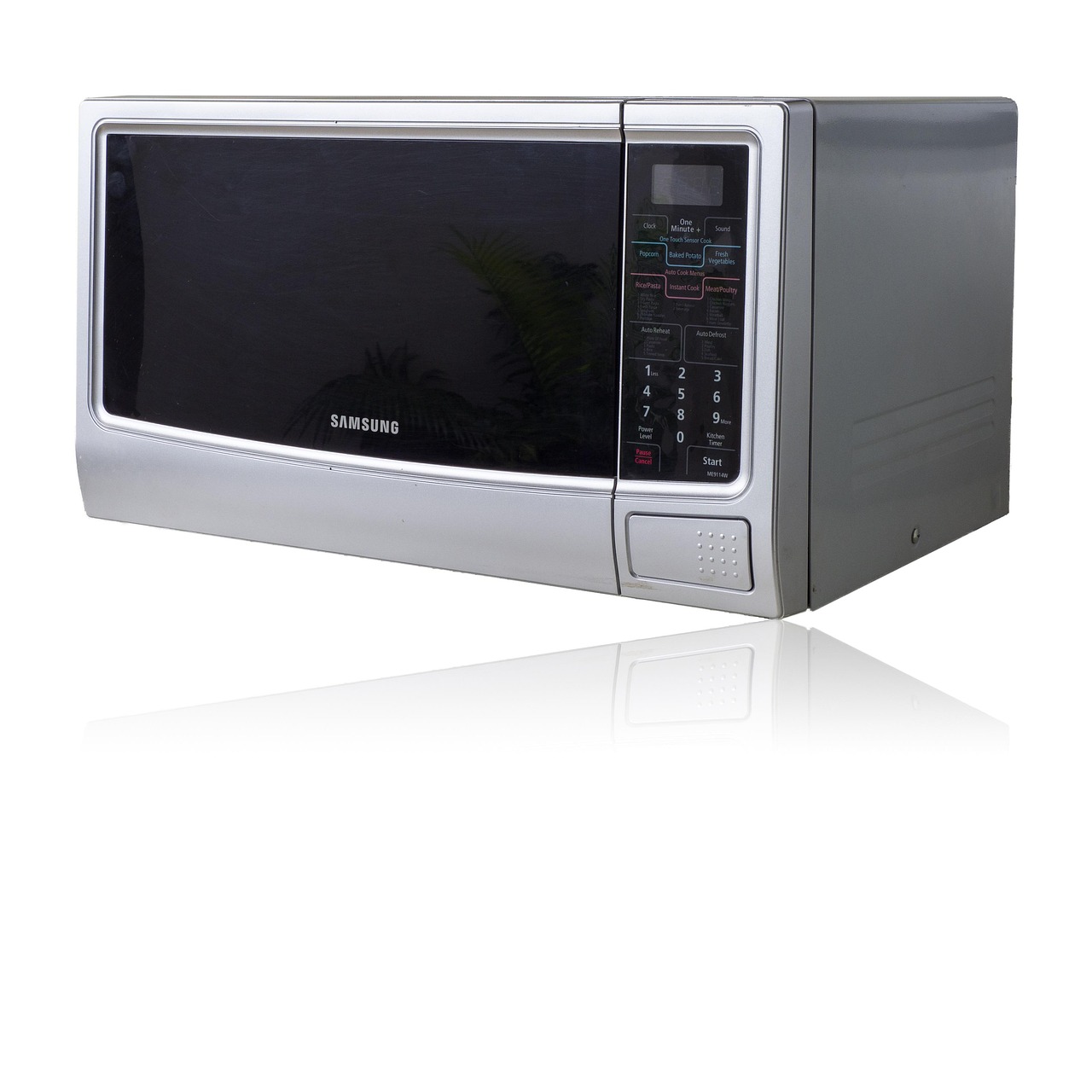
| Countertop | Renters, dorms, apartments and flexible kitchens | Lowest installation burden and easiest replacement | Uses counter space and may look less integrated |
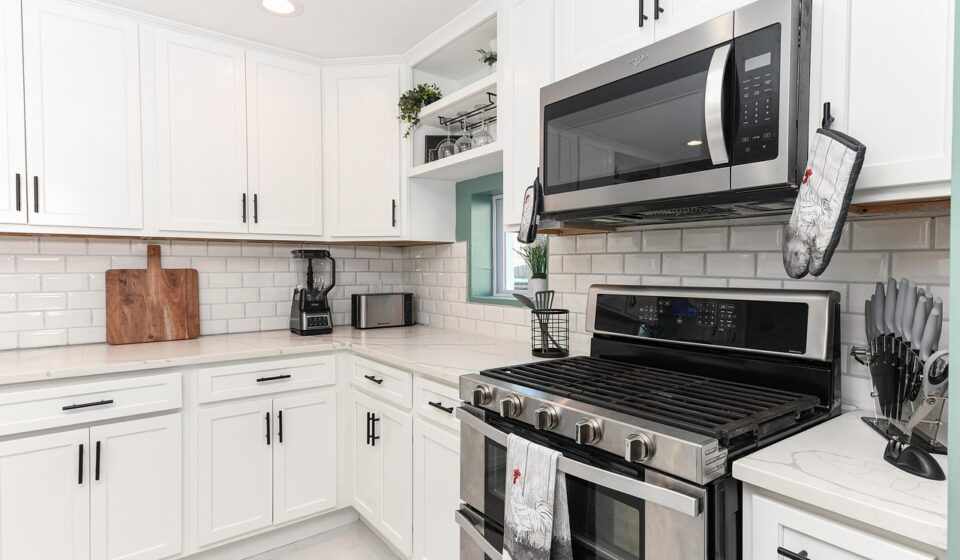
| Over-the-range | Kitchens where the microwave doubles as a hood area appliance | Saves counter space and may include a light and vent fan | Requires cabinet fit, mounting hardware and ventilation planning |
| Built-in or drawer | Remodeled kitchens and planned cabinetry | Clean appearance and permanent placement | Higher installed cost and more complex replacement |
Countertop units are usually the safest choice when value and flexibility matter. You can measure the appliance footprint, leave the rear and side clearances recommended by the manufacturer, and replace the unit without a contractor. Over-the-range models need closer planning. The nominal width, often around 30 inches, is only one part of the fit. Buyers also need to check cabinet height, cabinet depth, outlet location, ducted or recirculating ventilation options, door swing, and the required distance above the cooking surface stated in the appliance manual and local installation practice.
Built-in microwaves and microwave drawers should be selected only after the exact cutout dimensions and trim kit compatibility have been checked. A model may appear suitable by cubic feet but still fail if the face frame, airflow path or electrical placement does not match the installation.
Choose capacity by dishes, not by the box number
Microwave capacity is usually marketed in cubic feet, but the number on the carton does not always show what will fit in daily use. A tall bowl, covered food container, baby bottle sterilizer or wide dinner plate can be limited by the door shape, turntable size or interior height, even when the claimed capacity looks sufficient.
Consumer Reports’ recent microwave guidance is useful because it separates claimed size ranges from typical wattage and dimensions. Small countertop microwaves are commonly 0.8 cubic feet or less and around 700 watts. Medium units are often about 0.9 to 1.2 cubic feet and 800 to 1,000 watts. Large units are generally 1.3 cubic feet or more and may run around 1,000 to 1,250 watts. These categories are not universal standards, but they give buyers a realistic starting point.
- Small spaces: Choose 0.7 to 0.9 cubic feet only if you mainly heat mugs, small bowls or compact containers.
- Everyday family use: Choose about 1.0 to 1.2 cubic feet if you reheat plates, frozen meals and medium food storage containers.
- Large plates and meal prep: Choose 1.3 cubic feet or more if you use wide dinner plates, casserole dishes or taller covered bowls.
Before paying, measure the largest plate or container you expect to use. Then check the turntable diameter and interior height on the specification sheet or in the owner’s manual. If an 11 or 12 inch plate barely fits on the glass tray, it may still hit the wall or door as it rotates. A flatbed microwave removes the rotating tray, but buyers should still verify the usable floor area and how easy the cavity is to clean.
Match wattage and cooking technology to your habits
Wattage affects speed, but it should not be treated as a simple quality score. A 700 watt microwave can work in a dorm room or small apartment, although it will heat more slowly and may require time adjustments for frozen meals and recipe instructions written for higher-power units. Around 900 to 1,100 watts is a practical range for many kitchens because it balances heating speed, size and price. Larger models at 1,200 watts or more can be helpful for family portions, but they may also take more counter space and require more careful time control to avoid overcooking edges.
Inverter technology is worth considering if you defrost meat, melt chocolate, soften butter or cook foods that can develop hot edges and cold centers. Traditional microwaves often reduce power by cycling full power on and off. Inverter models are designed to deliver lower power more continuously. That does not make every inverter microwave automatically better, but it can improve control at lower settings when the feature is well implemented.
Sensor cooking is another feature with real value in the right use case. Instead of relying only on a fixed timer, a sensor setting monitors steam or humidity from the food and adjusts cooking time. Consumer testing organizations often point to sensors as a feature that reduces guesswork for reheating and some common foods. The limitation is that sensors still depend on the food and container. Very dry foods, sealed packages, unusual containers and small portions may still need manual timing.
Understand safety and energy facts before comparing claims
Microwave safety is heavily standardized in the United States, so shoppers should focus less on vague fear-based claims and more on physical condition, certification labels and correct use. The U.S. Food and Drug Administration says manufacturers must certify microwave ovens to meet federal radiation safety standards. The federal standard limits microwave leakage to 5 milliwatts per square centimeter at about 2 inches from the oven surface during the product’s lifetime. The FDA also states that ovens must have two independent interlock systems that stop microwave production when the door is opened, plus a monitoring system if an interlock fails.
The buying implication is clear: do not buy or keep a microwave with a bent door, damaged latch, cracked seal area or door that does not close firmly. Inspect these points immediately after delivery, especially if the carton shows dents or compression marks. Follow the manual for cookware rules. Glass, ceramic, paper and microwave-safe plastics are common options, but some plastics can melt, and metal or foil should be used only when the manual specifically allows it.
Energy claims need a separate reading. Microwave cooking can be efficient for many small reheating tasks because it heats food quickly rather than preheating a full oven cavity. However, government efficiency rules for residential microwave ovens have historically focused heavily on standby and off-mode power, not on ranking which model cooks dinner with the least energy. The U.S. Department of Energy’s microwave oven page lists amended standards from a 2023 final rule with a compliance date of June 22, 2026, while also noting a later proposal to rescind those standards. For buyers, the cautious takeaway is to check the current specification sheet rather than assume a broad green label tells the full story.
Also note that the ENERGY STAR product specification list covers many appliance categories, but residential microwave ovens are not typically shopped the same way as refrigerators or dishwashers with familiar ENERGY STAR labels. If electricity use matters to you, compare standby power if listed, auto-off behavior, display settings and your expected cooking pattern. See also: BOX DESIGN.
Prioritize features that change daily use
Most microwave feature lists are longer than most households need. To avoid overpaying, separate essential usability from occasional convenience.
- Worth prioritizing: clear controls, readable display, add-30-seconds button, kitchen timer, sound on/off option, child lock, easy-clean interior and a turntable that can be removed for washing.
- Useful for many homes: sensor reheat, inverter power, dedicated defrost by weight, memory settings and a turntable-off option for rectangular dishes.
- Situational: convection, air fry, broil, steam accessories and app control. These can save space if you truly use them, but they add complexity and may not replace a full oven or air fryer for every food.
For households that mostly heat coffee, oatmeal and leftovers, simple controls matter more than combination cooking. For frozen meals, check whether the control panel lets you enter exact times and power levels easily. For families with children or shared kitchens, the sound-off option and child lock may matter more than premium finishes.
Convection microwave combinations deserve special caution. They can brown and bake better than a microwave-only unit, but they are larger, heavier and often cost more. If the goal is crisp pizza or roasted vegetables, compare the convection cavity size and included racks, not just the word convection on the box.
Check price, warranty, delivery and packaging details
Microwave prices change frequently, so compare total cost rather than sticker price alone. For a countertop unit, total cost usually includes the appliance, taxes, delivery and any optional protection plan. For an over-the-range model, add mounting, venting parts, possible cabinet modification and haul-away. For a built-in unit, include the trim kit and any electrical or carpentry work.
Because microwaves contain a glass turntable, door switches, hinges and an electronic control board, delivery condition matters. Packaging is part of the buying decision, especially for online orders. When the box arrives, inspect all sides before opening. Look for crushed corners, punctures, water marks, broken foam, loose rattling or signs that the carton was re-taped. Photograph damage before removing the appliance if a return or freight claim may be needed.
After unpacking, verify the model number, serial label, glass tray, roller ring, racks if included, filters for over-the-range units, mounting template, screws, manual and warranty documents. Do not discard the carton until the microwave has been placed, checked and tested within the retailer’s return window. Run the first test only as instructed in the manual, typically with water inside the cavity, because many manuals warn against operating an empty microwave.
A source-backed buying checklist
| Checkpoint | Why it matters | What to verify |
|---|---|---|
| Fit | Wrong exterior dimensions can make a good microwave unusable | Counter depth, cabinet cutout, door swing, ventilation clearance and outlet location |
| Usable space | Claimed cubic feet may not match real dish fit | Turntable diameter, interior height and largest plate or container |
| Power | Wattage affects heating speed and recipe timing | Output wattage, power levels and defrost control |
| Features | Some features improve daily use while others add cost | Sensor reheat, inverter power, sound control, child lock and easy-clean interior |
| Safety | FDA guidance emphasizes certified design and an undamaged door system | Labeling, door seal, latch, hinges and manual instructions |
| Energy | DOE rules focus on standby power and may not reflect all cooking behavior | Current spec sheet, standby data if available and display auto-off options |
| Packaging | Shipping damage can affect safety and return eligibility | Carton condition, foam supports, accessories and immediate function test |
Frequently asked questions
What size microwave should most people buy?
For many households, a countertop microwave around 1.0 to 1.2 cubic feet and roughly 900 to 1,000 watts is a practical middle ground. Go smaller only when space is tight and your dishes are compact. Go larger if you regularly reheat full dinner plates, family portions or wide meal-prep containers.
Is a higher watt microwave always better?
No. Higher wattage usually means faster heating, but it can also mean a larger unit and a greater risk of overcooking if times are not adjusted. Control quality, sensor behavior, usable capacity and ease of cleaning are just as important for daily use.
Is an inverter microwave worth it?
It can be worth it if you often defrost, melt, soften or cook foods at reduced power. Inverter power can provide steadier low-power heating than traditional on-off cycling. If you only reheat drinks and leftovers at full power, the benefit may be less noticeable.
Should I buy a convection microwave instead of a regular microwave?
Buy a convection microwave only if you will use the baking or browning function often and have space for a larger appliance. It can be useful in small kitchens, but it is not always a full replacement for a standard oven, toaster oven or air fryer.
What should I inspect when the microwave is delivered?
Check the carton first, then inspect the door, hinges, latch, control panel, feet, glass tray, roller ring and included accessories. Keep the packaging until the unit passes a basic function test and you are sure it fits your space.