Binoculars buying guide for choosing the right magnification and lens size
Start with how and where you will use them
A useful binoculars buying guide starts with the viewing conditions, not with a brand list. For most general outdoor use, an 8×42 or 10×42 binocular is the safest starting point because it balances reach, brightness, field of view, and handheld stability. Compact 8×25 or 10×25 models are easier to pack, but they usually give up brightness and viewing comfort. Larger 50mm models can help in low light or astronomy, but they add weight. For more practical shopping frameworks, browse our Buying Guides.
The numbers printed on binoculars explain the main trade-off. In 8×42, the first number is magnification and the second number is the objective lens diameter in millimeters. Nikon’s sport optics guidance explains that higher magnification can narrow the field of view and make hand movement more noticeable, while larger objective lenses can improve brightness but also increase size and weight. (nikonusa.com)
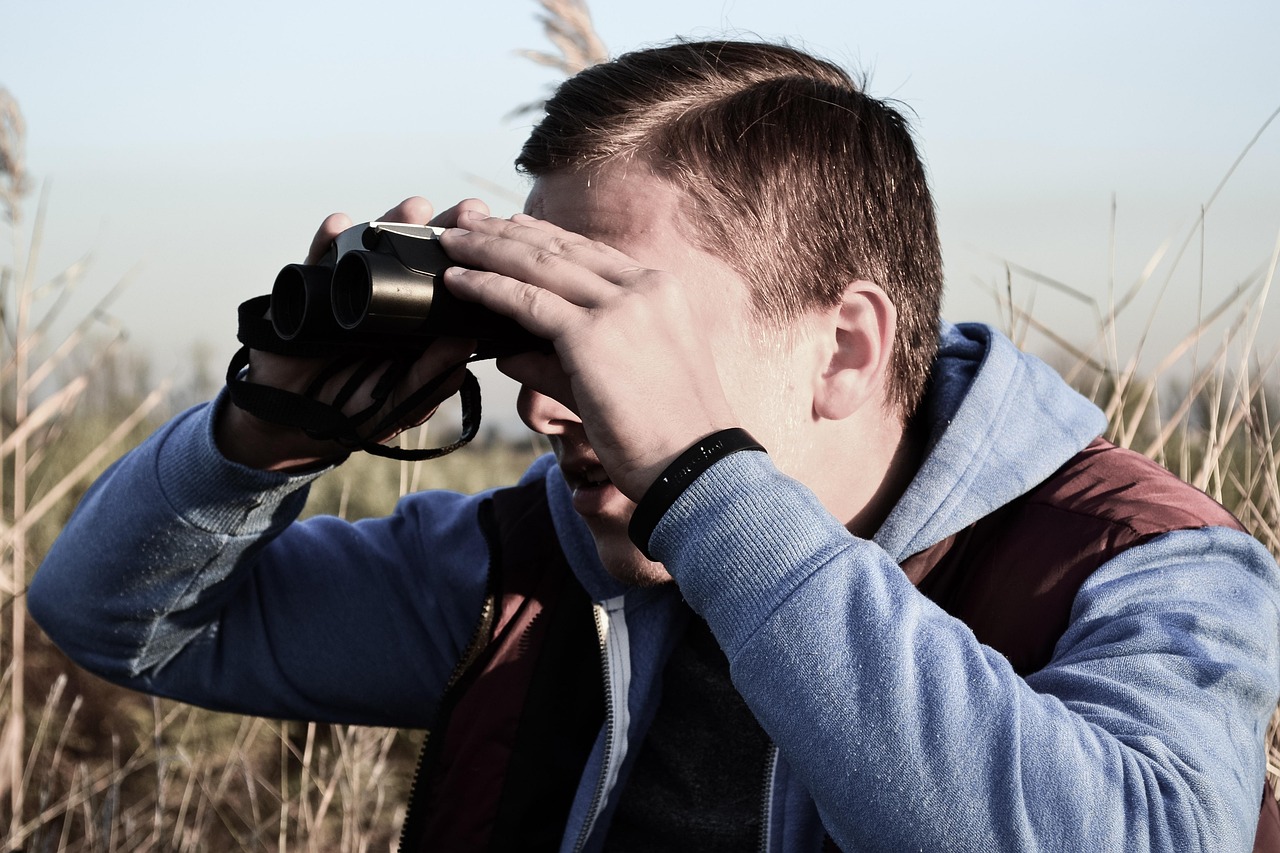
The right choice is therefore not simply the most powerful model. A football spectator, hiker, birder, hunter, sailor, and backyard stargazer may all need different compromises. The goal is to buy the pair you will carry and hold steady, not the pair with the most impressive number on the box.
Understand magnification before you choose 8x, 10x or more
Magnification controls how close the subject appears. An 8x binocular makes the subject appear eight times closer than the unaided eye; a 10x binocular appears to bring it ten times closer. The difference sounds small, but it changes how the binoculars handle in the field.
Choose 8x if you want a wider view, easier tracking, and steadier handheld viewing. This is especially useful for birding in trees, hiking, travel, concerts, and general observation. Cornell Lab’s birding education material notes that 8x and 10x are the most common magnifications for binoculars used by bird watchers, and its review of affordable full-size models describes 8×42 as a highly popular and versatile format. (academy.allaboutbirds.org)
Choose 10x if you often view distant subjects in open terrain, such as shorebirds, wildlife across fields, mountain scenery, or sports from high seats. The trade-off is that 10x binoculars usually show more hand shake and may have a narrower field of view than comparable 8x models.
Be cautious with 12x and above for everyday handheld use. Higher power can be useful from a fixed position, but many users need a tripod or image stabilization to see the benefit clearly. If the image jitters, extra magnification may reveal less detail rather than more.
Pick the right objective lens size
The objective lens diameter is the second number in a specification such as 8×42. Larger objective lenses collect more light, which can help in dim conditions. The cost is extra weight, bulk, and often a higher price. Lens size should match your use case, not simply the desire for the largest possible glass.
| Common size | Best fit | Main advantage | Main limitation |
|---|---|---|---|
| 8×25 or 10×25 | Travel, events, casual hiking | Very portable | Less comfortable in low light |
| 8×32 or 10×32 | Day hiking, travel, lightweight birding | Good balance of size and performance | Less bright than 42mm in poor light |
| 8×42 or 10×42 | Birding, wildlife, general outdoor use | Versatile and comfortable for many users | Heavier than compact models |
| 7×50 or 10×50 | Marine use, astronomy, low-light viewing | Brighter view and larger exit pupil | Bulky for long walks |
One useful brightness clue is exit pupil, calculated by dividing objective diameter by magnification. For example, 8×42 binoculars have a 5.25mm exit pupil, while 10×42 binoculars have a 4.2mm exit pupil. Nikon’s optics guide uses the same formula and explains that a larger exit pupil can make the view appear brighter, especially in darker conditions. (imaging.nikon.com)
Exit pupil is not the only brightness factor. Lens coatings, prism quality, and overall optical design also matter. A well-made 8×32 can outperform a poorly made 10×42 in contrast and sharpness. Still, exit pupil is a quick way to compare models when other factors are similar.
Compare field of view, eye relief and close focus
Many buyers compare magnification and lens size, then overlook the comfort specs that decide whether binoculars feel good in daily use. Three numbers deserve close attention: field of view, eye relief, and close focus.
Field of view
Field of view tells you how wide an area you can see at a stated distance. A wider field makes it easier to find moving subjects, follow birds in flight, scan landscapes, and watch sports action. When two models have the same magnification, the one with the wider field is often easier to use, provided image quality remains acceptable near the edges.
Eye relief
Eye relief is the distance from the eyepiece where your eye can see the full image. It is especially important if you wear glasses. Nikon describes binoculars with eye relief of 15mm or longer as high-eyepoint models that can help eyeglass wearers see the full field without vignetting. (imaging.nikon.com)
If you wear glasses, do not rely only on the printed number. Try the eyecups fully twisted down or folded down, check whether you can see the whole circular view, and confirm that the eyecups hold position. A model with generous eye relief but weak eyecups may still be frustrating.
Close focus
Close focus tells you how near an object can be while still appearing sharp. It matters for butterflies, insects, flowers, museum displays, and backyard observation. If you mainly watch distant wildlife, it may not be a deciding factor. If you enjoy nearby details, compare close-focus distance before buying. See also: BOX DESIGN.
Know which optical and build features are worth paying for
Once the main specs are correct, evaluate the optical and mechanical features. These features do not matter equally for every buyer, but they explain why two binoculars with the same 8×42 label may feel completely different.
- Prism design: Roof-prism binoculars are slim and popular for outdoor use. Porro-prism binoculars are wider but can offer strong optical value at lower prices.
- Lens coatings: Fully multi-coated lenses generally reduce reflections and improve light transmission compared with simpler coatings.
- ED or HD glass: Extra-low dispersion glass can reduce color fringing around high-contrast edges, although execution varies by model.
- Waterproofing and fog resistance: Look for specific manufacturer claims, seals, and nitrogen or argon purging if you use binoculars in rain, marine environments, or humid climates.
- Focus wheel feel: A smooth, precise focus wheel is critical for birds, wildlife, and sports because the subject rarely waits for you.
- Weight and balance: A heavier binocular may feel stable for short sessions but tiring on a long hike.
- Tripod compatibility: Important for high magnification, astronomy, and extended viewing from one location.
Cornell Lab’s review of affordable full-size binoculars emphasizes that image quality is not the only factor; ergonomics such as weight, focus wheel, barrel size, and eyecups also affect the final choice. That is a useful reminder for any buyer comparing specification sheets. (allaboutbirds.org)
Match the binocular to the activity
The easiest way to narrow your shortlist is to match the specification to the activity. The following recommendations are starting points, not universal rules.
| Use case | Good starting spec | Why it works |
|---|---|---|
| Birding and nature walks | 8×42 or 8×32 | Wide view, steady image and good brightness |
| Open-country wildlife | 10×42 | More reach for distant animals |
| Travel and casual events | 8×25, 10×25 or 8×32 | Easy to pack and carry |
| Marine use | 7×50 waterproof | Stable view and bright exit pupil |
| Astronomy | 7×50, 10×50 or tripod-supported higher power | Large objectives help under dark skies |
| Stadium sports | 8×32 or 10×32 | Enough reach without excessive bulk |
For astronomy or eclipse-related viewing, safety must come before equipment choice. NASA warns that looking at the Sun through binoculars or other optical devices without a proper solar filter secured over the front of the optics can cause severe eye injury. Regular sunglasses or ordinary handheld solar viewers are not a substitute for a correctly mounted optical solar filter. (science.nasa.gov)
Use a practical buying checklist before checkout
Before you buy, compare real usability instead of relying on one headline spec. If possible, test the binoculars outside or near a window, because store lighting can hide weaknesses in glare control, edge sharpness, and focusing speed.
- Set a realistic budget. Spend enough for clear optics and reliable mechanics, but do not assume the most expensive model is automatically right for your use.
- Choose magnification first. Decide whether 8x steadiness or 10x reach matters more.
- Choose lens size second. Pick compact, mid-size, full-size, or large objective lenses based on how much weight you will actually carry.
- Check eye relief. Glasses wearers should prioritize long eye relief and stable adjustable eyecups.
- Compare field of view. Wider is often better for moving subjects, especially at the same magnification.
- Test focus speed. Move from a near object to a distant object and back. The wheel should feel controlled, not loose or sticky.
- Inspect edge sharpness and glare. Look at branches, signs, or rooflines near the edge of the view.
- Confirm durability claims. If you need waterproofing, check the product’s stated rating or test conditions rather than relying on vague wording.
- Avoid unrealistic zoom claims. Very high-power compact zoom binoculars often sacrifice brightness, steadiness, and image quality.
- Check return policy and warranty. Fit and comfort are personal, so a fair return window is valuable.
A good final test is simple: can you find the subject quickly, focus without thinking, hold the image steady, and keep the binoculars comfortable for several minutes? If not, the specification may be right on paper but wrong for you.
Frequently asked questions
Are 8×42 or 10×42 binoculars better?
Neither is always better. Choose 8×42 for a steadier image, wider view, and easier tracking. Choose 10×42 when you regularly observe distant subjects and can hold the extra magnification steady.
What binocular size is best for beginners?
For most beginners, 8×42 is the safest full-size choice. It is bright enough for many outdoor conditions, easier to hold steady than higher-power models, and versatile across birding, hiking, travel, and general observation.
Do bigger lenses always mean better binoculars?
No. Bigger lenses can help brightness, but they also add size and weight. Coatings, prisms, alignment, focus quality, and ergonomics can matter as much as objective diameter.
What should glasses wearers look for?
Prioritize long eye relief, adjustable eyecups, and a full field of view while wearing glasses. As a practical benchmark, eye relief around 15mm or longer is often more comfortable, but personal testing is still important.
How much should I spend on binoculars?
Spend enough to get a clear, comfortable image and reliable construction for your use. A careful mid-range purchase often serves better than a cheap high-magnification model with poor brightness and unstable handling.