A practical guide to cardboard box design for shipping and retail
What good cardboard box design needs to solve
Good cardboard box design starts with a practical match: the product, the distribution route and the recovery system all have to work with the same box. For a shipping carton, that means protection against compression, drops, vibration, humidity, labeling demands and normal handling. For retail, the box also has to communicate clearly, open cleanly and support shelf operations. For ecommerce, right-sized and recyclable packaging is now an operational requirement as well as a sustainability target.
A useful design sequence is to define the use case, choose the structure, specify the board, design closures and graphics, test performance, and then document the final specification. For more ideas across packaging formats, browse the BOX DESIGN section.
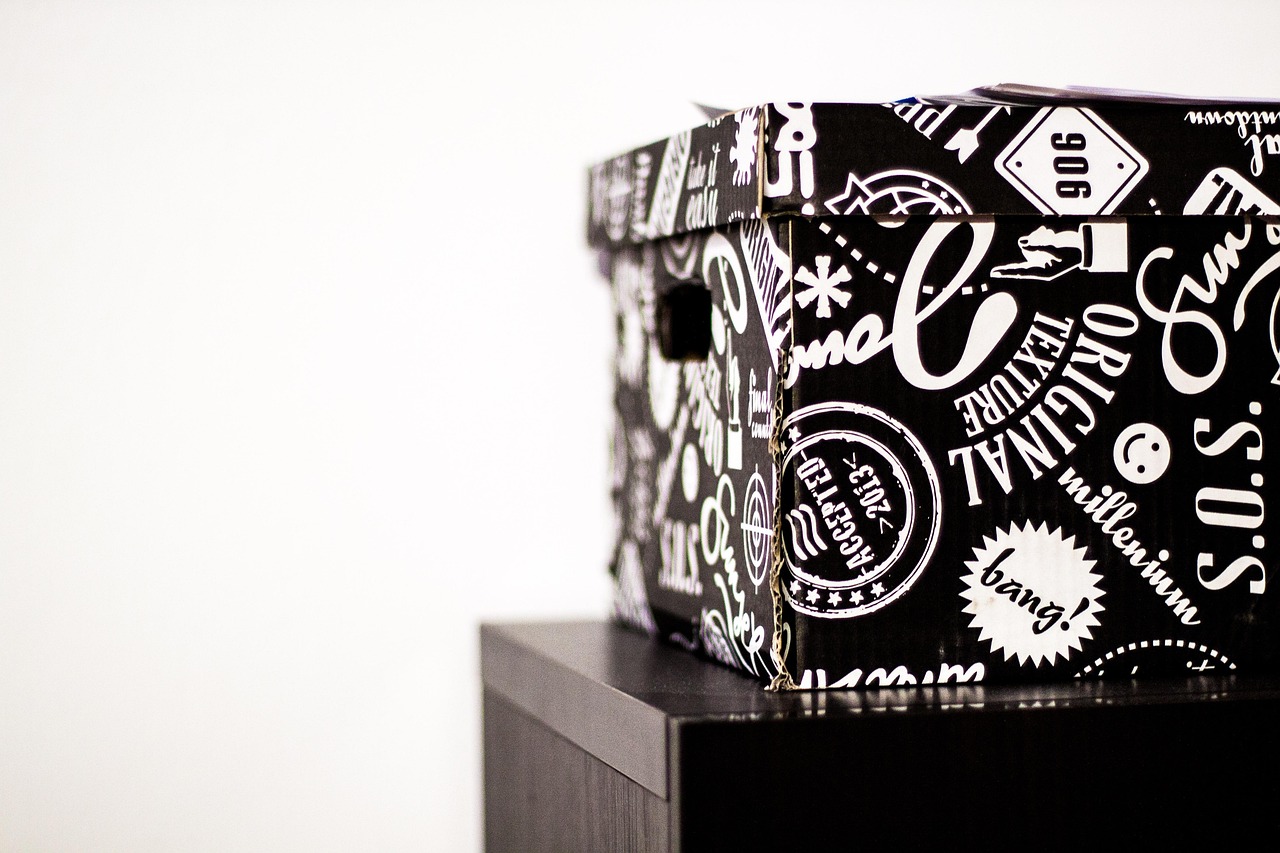
In everyday language, many people say “cardboard box” when they mean a corrugated shipping box. Technically, corrugated fiberboard is made from flat linerboards with a fluted medium between them. That layered structure provides much of the stacking strength, cushioning and stiffness. Paperboard folding cartons, such as cosmetic cartons or medicine cartons, are different packages with different strength limits. This article focuses on corrugated cardboard boxes used for shipping, ecommerce, storage and retail-ready packaging.
Start with the use case before drawing the dieline
A strong design brief prevents many box failures. It should describe the product, the sales channel and the handling environment before anyone selects a box style. A fragile glass jar shipped through a parcel network has different needs from a lightweight apparel item, a palletized industrial component or a retail display tray.
Useful starting questions include:
- What are the product dimensions, weight, center of gravity and fragile points?
- Will the box be handled as a parcel, a master carton, a pallet load, a retail display or a subscription shipment?
- How much empty space is acceptable, and where is cushioning actually needed?
- Will the box be packed manually, erected by machine or filled on an automated line?
- Does the customer, retailer, carrier or marketplace require a specific test method or packaging format?
- Will the package be exposed to cold chain conditions, humidity, warehouse stacking or long storage time?
The objective is not to make every box heavier. It is to put material where it addresses a verified risk. Overbuilding increases cost, storage volume and environmental burden. Underbuilding leads to product damage, returns and customer frustration. A clear brief makes those trade-offs visible before tooling, artwork or purchasing decisions are locked.
Choose a structural style that fits the job
The FEFCO code is widely used in the corrugated industry to identify common box styles by number. It helps buyers, designers and converters describe structures without relying only on drawings or informal names. The regular slotted container, commonly associated with FEFCO 0201, remains popular because it is simple, economical and compatible with many packing lines. It is not, however, the right answer for every product.
| Box style | Where it works well | Design caution |
|---|---|---|
| Regular slotted container | Standard shipping cartons, master cases and many warehouse applications | May require inserts or void fill if the product does not fit closely |
| Die-cut mailer | Ecommerce shipments, subscription boxes and presentation packaging | Dieline tolerances, locking tabs and opening features must be tested |
| Telescoping box | Products with variable height, heavier items or premium unboxing | Usually uses more board and may slow manual packing |
| Tray and sleeve | Retail-ready packaging, shelf displays and multipacks | Needs careful attention to stacking and shelf handling |
| Multi-depth shipper | SKU families with similar footprints but different heights | Extra score lines can reduce stiffness if poorly placed |
The structure also affects sealing. Tape, glue, locking tabs and stitched closures each change both the user experience and the strength of the finished box. A tear strip may improve opening, but it can weaken a panel if it sits in a high-stress area. A self-locking mailer may reduce tape use, but it still has to resist popping open during vibration and drops.
Specify board, flute and strength with evidence
Board specification is where many cardboard box design projects become too vague. “Strong cardboard” is not a usable purchasing instruction. A corrugated box specification should normally identify the wall construction, flute profile, board grade or strength rating, dimensions, style, printing method and closure requirements.
Single-wall board is common for lighter shipping boxes and retail packs. Double-wall board can be useful for heavier products, longer stacking periods or rougher freight conditions. Flute selection influences cushioning, compression strength, print surface and overall thickness. Smaller flutes can provide a smoother print surface and a thinner profile, while larger or combined flutes can improve stiffness and cushioning in some applications.
Strength ratings need context. Fibre Box Association technical guidance distinguishes burst strength testing from edge crush testing. Burst strength, often associated with the Mullen test, measures resistance to rupture. Edge crush test, or ECT, measures the force needed to crush corrugated board standing on edge and is often used as an indicator related to stacking performance. Neither number alone proves that the finished package will survive its route. Box style, dimensions, flute direction, closure, pallet pattern, humidity and product support all influence real performance.
Flute direction deserves special attention. In many shipping cartons, vertical flute direction supports stacking strength. Special designs, side-loading cartons and display structures may require a different orientation. If a design changes from hand packing to machine packing, flute direction and score quality should be reviewed again because folding behavior can change.
Design graphics and opening features around operations
Graphics are part of the box function, not just decoration. A shipping box may need clear SKU identification, orientation marks, handling icons, carton count, barcode zones, recycling instructions and retailer labels. A retail-ready box may also need brand messaging and shelf impact. The information hierarchy should be planned before artwork is applied to the dieline.
Barcodes and carrier labels should not be placed across folds, deep scores, locking tabs or highly textured surfaces. Important handling marks should remain visible after palletization or case packing. If store staff will open the box, the opening path should be obvious and safe. If consumers open it at home, the design should reduce the risk of product cuts from knives while still protecting the shipment.
The print method affects both appearance and specification. Flexographic printing is common for many corrugated boxes. Litho-laminated graphics can deliver high-quality retail presentation, while digital print can support short runs, versioning and seasonal campaigns. Heavy coatings, plastic laminates, metallized effects and large non-paper labels, however, can complicate recycling. The visual concept should therefore be checked against the intended recovery route before launch, not after artwork approval.
Large ecommerce operators have also pushed the market toward right-sized, paper-based packaging. Amazon’s 2024 sustainability reporting, for example, emphasized recyclable packaging, reduced void space and wider replacement of plastic air pillows with paper filler in North America. That does not mean every brand should copy one marketplace’s approach. It does show why box design is increasingly judged by material efficiency as well as damage prevention. See also: BUYING GUIDES.
Build recyclability and compliance into the specification
Corrugated packaging benefits from an established recycling stream in many markets. In the United States, the American Forest & Paper Association reported a cardboard recycling rate range of 69 to 74 percent for 2024 and 70 to 75 percent for 2025. High recovery, however, does not make every design automatically recycling-friendly. A box that combines paper fiber with difficult coatings, plastic windows, foil decoration, wet-strength treatments or oversized labels may be harder to sort and recycle in practice.
Design-for-recycling decisions should be written into the packaging specification. Useful rules include keeping the main structure fiber-based where possible, minimizing mixed-material attachments, confirming coating compatibility with the recycling stream, avoiding unnecessary plastic lamination and making recycling instructions clear but not misleading. If moisture resistance is required, the design team should compare coating options instead of defaulting to the most durable material.
Regulatory pressure is also changing the design brief. The European Union’s Packaging and Packaging Waste Regulation, Regulation (EU) 2025/40, entered into force on February 11, 2025 and generally began applying from August 12, 2026 on a phased basis. Its direction is clear: packaging placed on the EU market will face stronger requirements around recyclability, waste prevention and circularity, with major recyclability measures scheduled for 2030. In the United States, several states including California, Colorado, Maine, Maryland, Minnesota, Oregon and Washington have enacted extended producer responsibility laws for packaging or related covered materials. Details differ by state, but the design implication is similar: brands need better records of packaging material, weight, format and recyclability.
This is not legal advice, and packaging teams should check the rules that apply to their markets. From a design standpoint, the safer habit is to maintain a bill of materials for each box, record board grades and coatings, document average packaging weight and keep test results tied to the active specification.
Test the box before full launch
Testing turns a design opinion into evidence. ASTM D4169 provides a uniform basis for evaluating shipping units in a laboratory against expected distribution hazards. ISTA procedures are also widely used in transport packaging; ISTA 3A applies to individual packaged products shipped through parcel delivery systems up to 150 lb, or 70 kg. These tests do not guarantee zero damage, but they help compare designs and identify weak points before a full production run.
A practical validation plan may include prototype fitting, compression checks, drop testing, vibration testing, closure evaluation, pallet pattern review, humidity conditioning when relevant and a packing-line trial. The test should use the real product or a representative dummy with the same weight distribution and fragile points. Testing an empty box or an unrealistic sample can create false confidence.
| Risk | What to check | Possible design response |
|---|---|---|
| Product damage during drops | Corner, edge and face impacts after packing | Add inserts, improve fit or change cushioning zones |
| Stack collapse | Compression strength, pallet pattern and warehouse conditions | Adjust board grade, flute direction, dimensions or load pattern |
| Box opens in transit | Tape, glue, lock tabs and vibration behavior | Revise closure length, adhesive, tab geometry or sealing process |
| Poor packing speed | Manual handling time or machine erection consistency | Simplify folds, improve scores or change case style |
| Recycling concern | Coatings, labels, inserts and mixed materials | Use compatible coatings, reduce attachments or separate components |
After testing, the final specification should be controlled. If a supplier changes board grade, flute, liner weight, adhesive, print coating or dieline dimensions, the package may need partial or full retesting. Good cardboard box design is not only the first approved sample; it is the ability to reproduce that sample reliably.
Frequently asked questions
What is the difference between cardboard and corrugated box design?
Many people use “cardboard” as a general word for paper-based boxes. In shipping, the more precise term is usually corrugated box design, because the structure uses fluted corrugated medium between linerboards. Folding cartons made from paperboard are thinner and are usually designed for retail display rather than heavy distribution protection.
How do I choose between ECT and Mullen ratings?
ECT is closely related to edgewise compression and is useful when stacking strength is a major concern. Mullen burst strength measures resistance to rupture. The choice depends on the product, route and customer requirements. For important shipments, the finished package should be tested rather than selected by rating alone.
Does a recyclable cardboard box always use less material?
No. A recyclable box can still be overbuilt, and an ultra-light box can cause damage that creates more waste. The better objective is fit-for-purpose design: enough material to protect the product, minimal unnecessary void space and components that are compatible with the intended recycling stream.
When should a brand use a die-cut mailer instead of a regular slotted container?
A die-cut mailer can be useful when presentation, easy opening, close product fit or reduced tape use matters. A regular slotted container is often more economical and efficient for standard case packing. The decision should consider packing speed, tooling cost, board use, damage risk and customer experience.
How early should package testing happen?
Testing should begin before artwork and production tooling are locked. Early prototypes can reveal fit, closure and handling problems that are expensive to fix later. Final testing should use production-intent materials, the intended closure method and a representative distribution route.