How to evaluate an industrial packaging corporation for resilient supply chains
What buyers are really evaluating
An industrial packaging corporation should be judged by how well its packaging protects products in the handling, storage, and transport conditions the shipment will actually face—not by unit price alone. A sound decision connects material selection, package engineering, test evidence, documentation, sustainability requirements, and compliance risks in one specification. For procurement, operations, and quality teams, the practical question is this: can the packaging prevent avoidable loss without adding unnecessary material, freight cost, or regulatory exposure?
That question matters because packaging is no longer treated as a disposable afterthought. The U.S. EPA’s municipal solid waste data show that containers and packaging accounted for 82.2 million tons, or 28.1 percent, of U.S. MSW generation in 2018, the agency’s most recent national data set for that program. (epa.gov) For readers tracking packaging topics across materials and applications, see the packaging materials category.

Start with the packaging job, not the catalog
A useful industrial packaging review starts by defining the job the package must perform. A heavy machine component, a corrosion-sensitive metal part, a palletized chemical container, and a fragile electronic assembly have different failure modes. The packaging specification should therefore begin with product weight, center of gravity, sensitivity to shock or vibration, moisture exposure, abrasion risk, stacking requirements, expected storage time, and the number of handling points in the route.
Distribution conditions matter as much as the product itself. A package moving by full truckload to one warehouse has a different risk profile from a mixed-load shipment that may pass through depots, conveyors, forklifts, and container yards. Buyers should ask whether the supplier can translate the route into measurable packaging requirements, such as compression strength, cushioning performance, corrosion protection, load containment, and pallet compatibility.
The goal is not maximum packaging. The goal is enough packaging, verified for the route and the product value. Over-packaging increases material use, freight weight, disposal cost, and sometimes labor time. Under-packaging leads to product damage, returns, rework, customer claims, and lost production time. A capable packaging partner should help define that balance rather than simply recommend the strongest or cheapest option.
Compare industrial packaging materials by function
Industrial packaging often combines several materials instead of relying on one. Corrugated board may provide outer containment, foam or molded pulp may manage impact, stretch film may stabilize a pallet, vapor corrosion inhibitor materials may protect metals, and wood or plastic pallets may carry the load. The right material choice depends on the failure risk being controlled.
| Packaging need | Common material or format | What to verify |
|---|---|---|
| Stacking and compression | Corrugated cartons, heavy-duty board, rigid containers | Box compression, humidity impact, pallet pattern, warehouse stacking height |
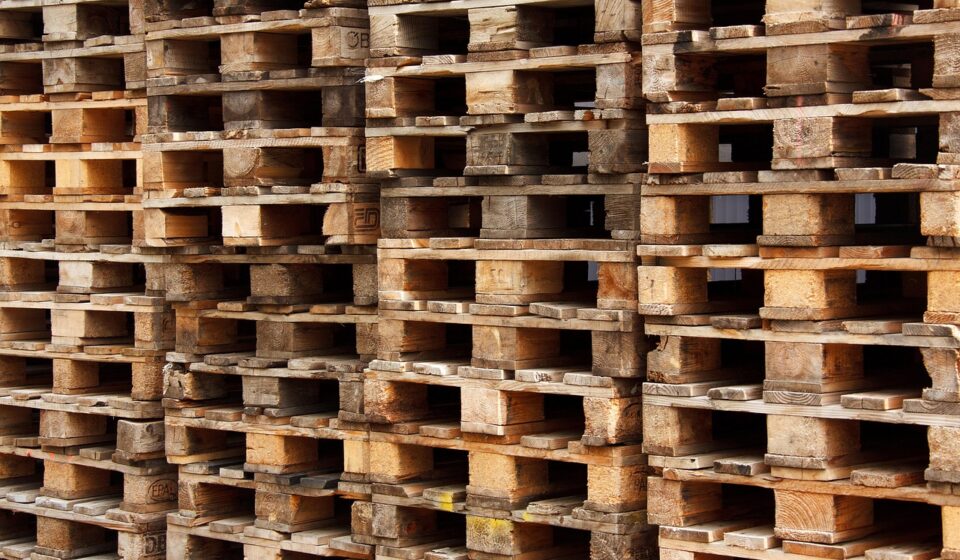
| Heavy or oversized loads | Wood crates, pallets, skids, metal racks | Load rating, forklift entry, fastening method, export treatment requirements |
| Shock and vibration control | Foam, molded pulp, suspension packs, engineered inserts | Drop height, vibration profile, product fragility, recovery after repeated impacts |
| Moisture or corrosion protection | Barrier bags, desiccants, VCI papers or films, liners | Storage duration, humidity exposure, seal integrity, material compatibility |
| Pallet load stability | Stretch film, strapping, corner boards, slip sheets | Containment force, edge protection, load shift risk, unloading method |
This comparison is where many purchasing errors begin. A lower-cost carton may still fail if it is paired with the wrong pallet pattern. A premium cushioning material may be wasted if the package has poor closure strength. A strong crate may create export delays if the wood packaging marks are missing or incorrect. Material decisions should therefore be reviewed as part of the whole shipping unit, not as isolated components.
Testing and documentation should be part of the offer
For industrial buyers, claims about strength or durability are less useful than documented performance. ASTM D4169 provides a laboratory framework for evaluating shipping units against anticipated distribution hazards using a sequence of test elements. The standard is designed as a uniform basis for testing shipping containers and systems, although it does not replace every product-specific or regulatory requirement. (store.astm.org)
ISTA procedures are also widely used in transport packaging. ISTA describes different categories of procedures, including non-simulation integrity tests, partial simulation tests, and general simulation tests intended to help evaluate packaged-product performance under distribution conditions. (ista.org) For buyers, the issue is not simply whether a supplier recognizes the acronyms. The supplier should be able to recommend a suitable protocol for the product, route, carrier, and risk tolerance.
Documentation should include more than a pass or fail statement. A practical approval package may include material specifications, drawings, closure instructions, palletization diagrams, test method references, sample identification, environmental conditioning notes, photos of tested units, acceptance criteria, and change-control rules. If a package is modified later—for example, by changing board grade, foam density, tape type, pallet size, or unit-load pattern—the team should decide whether retesting is required.
This is why a packaging decision should involve quality, logistics, engineering, procurement, and sometimes regulatory staff. Procurement may see the price difference first, while operations may experience the damage risk later. A documented specification gives all teams a shared reference point.
Sustainability has moved into the specification
Sustainability in industrial packaging is often discussed too generally. A more useful approach is to connect environmental goals to measurable packaging choices: source reduction, recycled content, recyclability, reuse potential, damage prevention, freight efficiency, and responsible end-of-life handling. The EPA data also show why material decisions matter at scale: corrugated boxes were a major packaging category in the 2018 U.S. MSW data, and the EPA estimated a 96.5 percent recycling rate for corrugated boxes that year. (epa.gov)
ISO 18602 takes a balanced approach by focusing on optimization of the packaging system. Its scope covers assessment of packaging weight or volume while keeping the material content consistent with the packaging functions. (iso.org) This matters because the lightest package is not automatically the most sustainable if it increases product damage, reshipment, or waste. In industrial supply chains, preventing damage can be an environmental benefit as well as a financial one.
Buyers should ask an industrial packaging corporation to separate verified facts from broad marketing language. Useful evidence may include material composition, recycled-content documentation, recyclability guidance for specific markets, reusable packaging cycle assumptions, and packaging reduction calculations. Unsupported claims such as eco-friendly, green, or sustainable are much less useful unless the basis for the claim is defined. See also: BOX DESIGN.
Compliance risks should be designed in early
Compliance issues often appear late in the shipping process, when changes are expensive. Wood packaging is a common example. USDA APHIS states that regulated wood packaging material used to support, protect, or carry cargo into the United States must be treated and certified under ISPM 15, and the same standard is used for U.S. exports to help meet importing-country requirements. (aphis.usda.gov) APHIS guidance for imports also refers to materials such as pallets, skids, crates, boxes, cases, and bins, and notes that inspectors look for the official ISPM mark. (aphis.usda.gov)
For companies selling into Europe, packaging compliance is also changing. The European Commission states that the Packaging and Packaging Waste Regulation entered into force in February 2025 and that its rules began applying on a phased basis from 12 August 2026. The Commission describes the law as addressing packaging waste, harmonizing rules across the single market, and supporting recycling and sustainable packaging solutions. (environment.ec.europa.eu)
These rules do not mean every industrial package needs the same design. They do mean packaging teams should identify target markets early, confirm whether wood, plastic, paper, labels, inks, or reusable formats create obligations, and keep documentation available. Where legal obligations are unclear, companies should confirm requirements with qualified compliance counsel or the relevant authority rather than relying on a supplier’s general statement.
Questions to ask before approving a packaging partner
A structured supplier review helps buyers move beyond price comparison. The following questions are practical because each one can be answered with evidence, not slogans.
- What product and route data are required before a package is specified?
- Which failure modes are being designed against: shock, vibration, compression, moisture, corrosion, abrasion, contamination, or load shift?
- Which materials are proposed, and what function does each material perform?
- What recognized test method or internal validation process supports the design?
- What are the acceptance criteria for product condition and package condition after testing?
- How are drawings, material specifications, and work instructions controlled?
- What changes would trigger a packaging review or retest?
- How are export wood packaging requirements, labeling rules, and market-specific obligations checked?
- Can the design reduce material or cube without increasing damage risk?
- How will packaging performance be monitored after launch?
The strongest answer is usually not a single document. It is a system: design inputs, material rationale, testing, approval records, operating instructions, and feedback from actual shipments. That system is what separates an ordinary packaging purchase from a resilient industrial packaging program.
Frequently asked questions
What does an industrial packaging corporation usually provide?
It may provide materials such as corrugated packaging, pallets, crates, cushioning, films, straps, liners, and protective systems. More capable organizations may also support package design, testing coordination, documentation, and supply-chain packaging reviews. Buyers should verify the exact scope instead of assuming that every supplier provides engineering or compliance support.
Is the lowest-cost industrial package usually the best choice?
Not necessarily. Unit price is only one part of packaging cost. A cheaper package can become expensive if it increases product damage, labor time, freight inefficiency, warehouse problems, rejected shipments, or customer claims. A useful comparison should include total landed packaging impact, not only the invoice price of materials.
When should industrial packaging be retested?
Retesting should be considered when the product, material, dimensions, cushioning, closure method, pallet pattern, carrier route, handling method, or regulatory requirement changes in a way that could affect performance. The decision should be documented so future teams understand why a package remains approved.
How should buyers compare sustainability claims?
Buyers should ask for specific evidence: material composition, recycled content, recyclability in target markets, source-reduction calculations, reuse assumptions, or recognized assessment methods. A claim is more credible when it explains what improved, compared with what baseline, and whether performance protection was maintained.
The practical takeaway
The right industrial packaging corporation is not simply the one with the broadest catalog. It is the one that can connect product risk, distribution reality, material performance, test evidence, sustainability goals, and compliance requirements into a workable packaging specification. For industrial buyers, that approach reduces avoidable damage, supports more predictable logistics, and makes packaging decisions easier to defend when costs, regulations, and supply-chain conditions change.